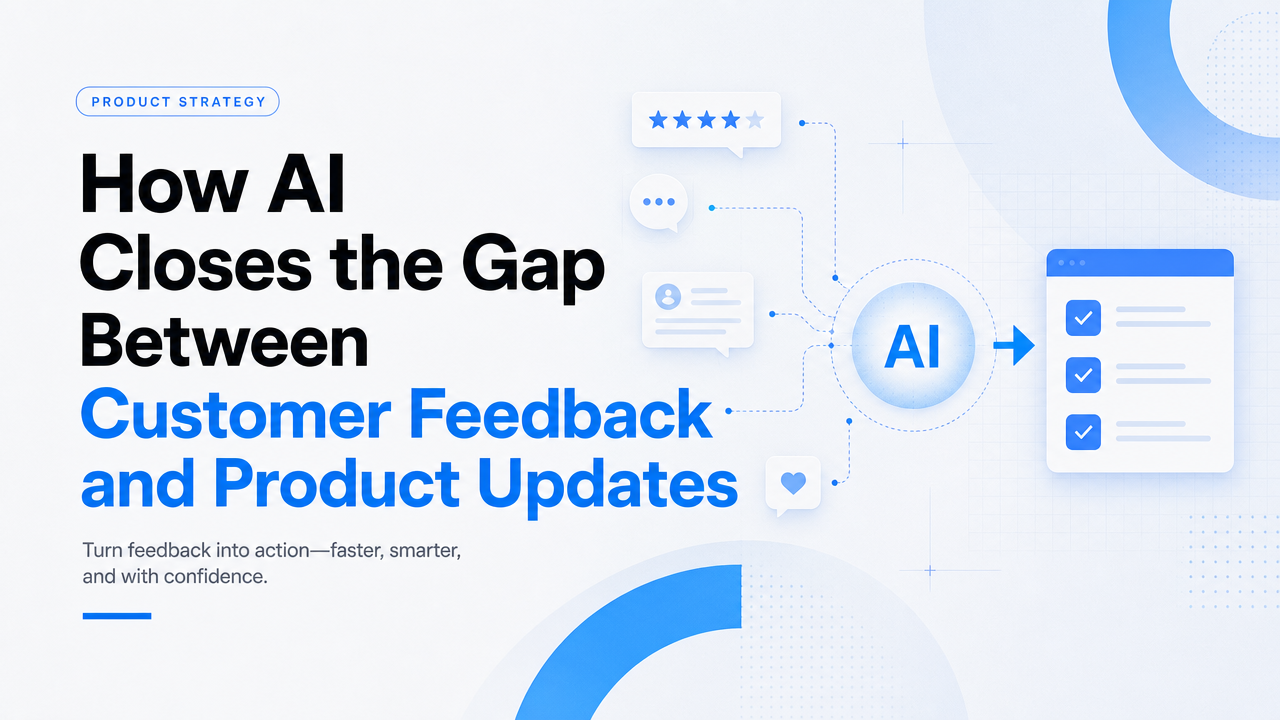
The Feedback Bottleneck Product Teams Face
Most product-focused teams collect customer feedback through scattered channels, support emails, surveys, reviews, social mentions, in-app responses, but few have a system to turn that feedback into action quickly. The problem isn't the volume of feedback; it's the gap between hearing it and acting on it. Between collecting feedback and shipping a fix, weeks or months pass. During that silence, customers drift. They post negative reviews, cancel subscriptions, or simply stop opening your app.
This is where AI-driven customer feedback loops matter. Rather than manually aggregating comments across platforms, coding themes by hand, or writing follow-up emails one by one, AI can ingest, prioritize, and respond to feedback in near-real time, freeing your team to focus on building instead of managing the feedback machinery.
What AI Actually Does in a Customer Feedback Loop
A mature AI feedback system works across three phases: collection, analysis, and response.
Intelligent Collection Across Every Channel
Rather than asking your team to log into five different platforms each morning to check for new feedback, AI monitors your entire listening footprint at once. It aggregates feedback from support tickets, Twitter mentions, product review sites, in-app surveys, and email inboxes into a single stream. The system normalizes and timestamps everything, so you're not sifting through duplicate or outdated comments.
AI can also prompt customers for feedback at the right moment, after they complete a key action or hit a pain point, without bombarding them. This improves both quantity and quality of responses.
Automated Sentiment and Theme Extraction
Raw feedback is noise. AI transforms it into signal by scoring sentiment, extracting recurring themes, and surfacing what your customers actually care about. Instead of reading 200 comments to spot that 40% mention slow load times, the system tells you exactly that. It flags which issues affect the most users, which affect your highest-value customers, and which are unique edge cases.
AI-powered feedback analysis turns scattered customer comments into prioritized, actionable insights, so product decisions come from data, not gut feel.
Instant, Consistent Customer Responses
Customers expect acknowledgment. If a user posts a complaint on Twitter or leaves a critical review, a weeks-long silence damages trust. AI can draft responses that acknowledge the issue, clarify your roadmap, or route the concern to the right team, all without a human manually writing each reply. These responses are consistent in tone and aligned with your brand voice.
This doesn't replace human support; it accelerates it. Your team still owns the conversation, but AI handles the volume, freeing people to solve hard problems.
Why This Matters for Product-Focused Teams
You build because you're solving a real problem. But if you can't hear how customers are experiencing that solution, you're flying blind. Manual feedback loops force a false choice: spend time managing feedback, or ignore it and ship in the dark.
AI-driven customer engagement systems remove that trade-off by automating the grunt work, collection, tagging, and initial response, so your team gets clean, prioritized insight without the overhead. You learn what's breaking, what users love, and what's confusing them, all in real time. You can ship a fix, and within hours, your customers know you heard them and acted.
This speed builds loyalty. Customers who see their feedback result in action, even small, fast fixes, stick around and evangelize. They feel heard because you actually are listening.
How Feedback Integration Fits Into Faster Shipping
When feedback is fragmented and slow to surface, product decisions lag. You discover critical bugs three sprints too late. You build features no one asked for because you didn't hear what users actually needed. AI automation reshaping product cycles applies equally to feedback: faster input means faster iteration.
Imagine this workflow:
- Customers report a usability issue across multiple channels.
- AI detects the pattern within hours and flags it as high-impact.
- Your product team sees the alert, discusses it briefly, and adds it to this week's sprint.
- You ship a fix or workaround days later.
- AI automatically notifies the affected customers that you've addressed it.
That entire cycle, from customer problem to shipped solution to acknowledged fix, can happen in a week instead of two months. Your team ships faster because decisions come from real data, not speculation.
Feedback Loop Mechanics: AI vs. Manual
The difference is operational. Manual feedback management requires someone to:
- Check email, Slack, Twitter, reviews, support tools, and in-app feedback multiple times daily.
- Read and categorize each piece by hand.
- Write personalized responses.
- Compile periodic reports for the team.
- Follow up on unresolved issues.
It's repetitive work that drains focus from actually solving the problems customers name.
AI does all of that in minutes, continuously. It ingests feedback constantly, surfaces trends in real time, drafts consistent responses, and flags escalations. Your team reviews and acts on the output, not the raw noise.
Real Impact: Speed and Customer Retention
Here's what changes when you close the feedback loop fast:
- Issue resolution time shrinks. Bugs and pain points surface and get fixed in days, not months.
- Customer churn drops. Users who see their feedback turn into action feel valued. They're more likely to renew, upgrade, and refer.
- Feature prioritization improves. You ship what users actually need because you hear them in real time, not six months after the fact.
- Your team ships faster. Time spent manually aggregating feedback is time not spent building. AI handles the administrative overhead so engineers can focus on code.
This is why integrating AI marketing tools into product development matters. Marketing isn't separate from product; customer voice is part of the feedback system that guides what you build next.
Getting Started: Feedback AI Isn't Complicated
You don't need to overhaul your entire workflow. Start by connecting your existing feedback channels to an AI system that can listen and synthesize. Most modern AI platforms will:
- Ingest feedback from your support tool, social channels, and surveys automatically.
- Surface the most common issues and sentiment trends weekly.
- Draft responses to common questions or complaints for your review.
- Track which feedback items have been addressed or shipped.
Your team still owns the conversation and the decisions. AI just removes the noise and busywork, so you see signal faster.
When product teams automate repetitive tasks, they don't lose touch with customers; they hear them more clearly. Feedback loops are marketing work, but they're also product work. They belong in your stack.
The Compound Benefit
What makes AI feedback loops truly valuable is their compound effect. Each customer issue you resolve fast builds trust. Each time you acknowledge feedback, customers feel heard. Each shipped fix rooted in real customer data strengthens your product. Over time, your retention improves, your NPS climbs, and your team builds faster because they're solving real problems, not guessing.
This is the hidden leverage of closing the feedback loop: it makes your entire product engine more efficient. You stop wasting cycles on wrong guesses and start shipping with confidence.