Most indie hackers ship a blog and then vanish into the product. Months pass. They check traffic once, see the numbers look small, and decide blogging doesn't work. What they actually checked: total pageviews, bounce rate, maybe session duration. What they never measured: which posts drive users who stay, convert, or talk about the product.
That gap between what you're watching and what actually matters is the difference between vanity metrics and performance ranking. Understanding it is the difference between a blog that builds your audience and one that wastes your time.
Vanity Metrics Sound Good. They Don't Tell You Anything.
Vanity metrics are the numbers that feel impressive in the moment but don't move the needle on your business. For a product blog, the worst offenders are:
- Total pageviews. A post that ranks for a broad keyword and pulls in 500 visits from people searching for something tangential tells you nothing about fit.
- Bounce rate. High bounce doesn't always mean bad content, sometimes readers get the answer they needed and left. Low bounce can mean they got stuck reading filler.
- Time on page. Users can spend five minutes confused. Time on page is not a proxy for value.
- Social shares. A post that gets shared around your friend group might never move a single paying user.
The trap is that these numbers are easy to track and they feel objective. You can build a dashboard. You can report on them. You can watch them trend upward and feel like progress is happening. But they don't tell you if your blog is actually working for your business.
Performance Ranking Measures What Matters: Qualified Engagement
Performance ranking flips the question. Instead of "Did people see this?" it asks "Did the right people find value in this, and did it move them closer to your product?"
At its core, performance ranking ranks your published blog posts based on organic clicks, but more specifically, clicks from people who land on your post and then navigate to your product or take another meaningful action. The metric compounds: a post that brings traffic is good. A post that brings traffic *and converts some of those readers into users* is what you're actually optimizing for.
This is how Morket's performance ranking works. It tracks which of your blog posts drive organic clicks and correlates that with downstream behavior, users who arrive via that post and then explore your product, sign up for a trial, or stay engaged. Posts that score high on this ranking are the ones pulling your ideal customer, not just anyone with a search query.
The practical difference: Say you published one post on "how to optimize your workflow" that got 300 pageviews and another on "workflow tools for indie hackers" that got 80 pageviews. The first post looks like a winner by traffic. But if the second post brought 12 of your actual target users and the first brought 2, performance ranking flags the second as the real success, and tells you to write more like it.
Why This Matters for Content Strategy
Once you stop chasing vanity metrics, your blogging strategy changes completely. You stop trying to rank for the biggest keywords. You stop writing for traffic volume. You start writing for the person who will use your product.
This is where content performance ranking should guide every blog decision you make. Every new post, every update, every topic choice should be informed by: Which past posts actually converted? What themes resonate? What language and angle brought qualified readers?
Performance ranking also saves you from the sunk cost trap. A post that seemed like a good idea but doesn't rank well in performance data gets flagged early. You can update it, repurpose it, or move on, rather than keeping it because it still gets occasional views.
The Mechanics: How to Spot the Difference in Your Own Data
If you're using Morket, performance ranking is built in. The system automatically correlates organic clicks with user behavior, showing you which posts are actually driving qualified traffic to your product. You can also utilize Morket's video modules to create engaging video content that complements your blog strategy.
If you're tracking manually, the gap is harder to bridge, but the logic is the same. Set up UTM parameters or internal tracking so you can see which blog posts lead to signups or product exploration. Then compare that data against raw pageviews. You'll almost certainly find that your highest-traffic posts are not your highest-converting ones.
Performance ranking answers the question vanity metrics can't: "Is this blog post actually helping me grow my product?"
The posts that score high on performance ranking are the ones worth doubling down on. They're the topic angle, the writing style, the keyword angle that speaks to your audience. They're your roadmap for what to write next.
Building a Blog Strategy Around Real Performance
Once you have performance ranking data, your blogging becomes intentional. How to leverage Morket's Blog Autopilot for consistent content creation shows one way to automate this: feed the system your top-performing posts, and it generates new content aligned with the same angle, style, and intent. You're not guessing at topics anymore. You're multiplying what you know works.
The second-order effect is speed. Instead of publishing 10 posts and hoping one converts, you can publish 3 high-conviction posts based on performance data, update and amplify them as needed, and move on to the next channel. AI marketing automation lets product teams ship faster without sacrificing growth because the automation is targeted, not spray-and-pray.
The Competitive Advantage
Most indie hackers don't have the infrastructure to track performance ranking at all. They publish, they check Google Analytics once a month, and they decide if blogging works. Those who do, who align their strategy around which posts actually convert, pull away quietly. They ship fewer posts, but each one does more work.
Vanity metrics are the easy game. Anyone can chase pageviews. Performance ranking is the hard game, because it requires you to define what "working" actually means for your product, and then have the discipline to keep doing what works rather than what feels productive.
Your blog should be growing your product. If you don't know which posts are actually doing that, you're optimizing for the wrong thing. To truly grab a user's attention, focus on crafting content that speaks directly to their needs and guides them towards meaningful actions that align with your product goals. Additionally, Morket's video modules can assist in generating attention-grabbing videos that support your overall content strategy, ensuring consistency across all channels.
Using Hooks to Gain Traction
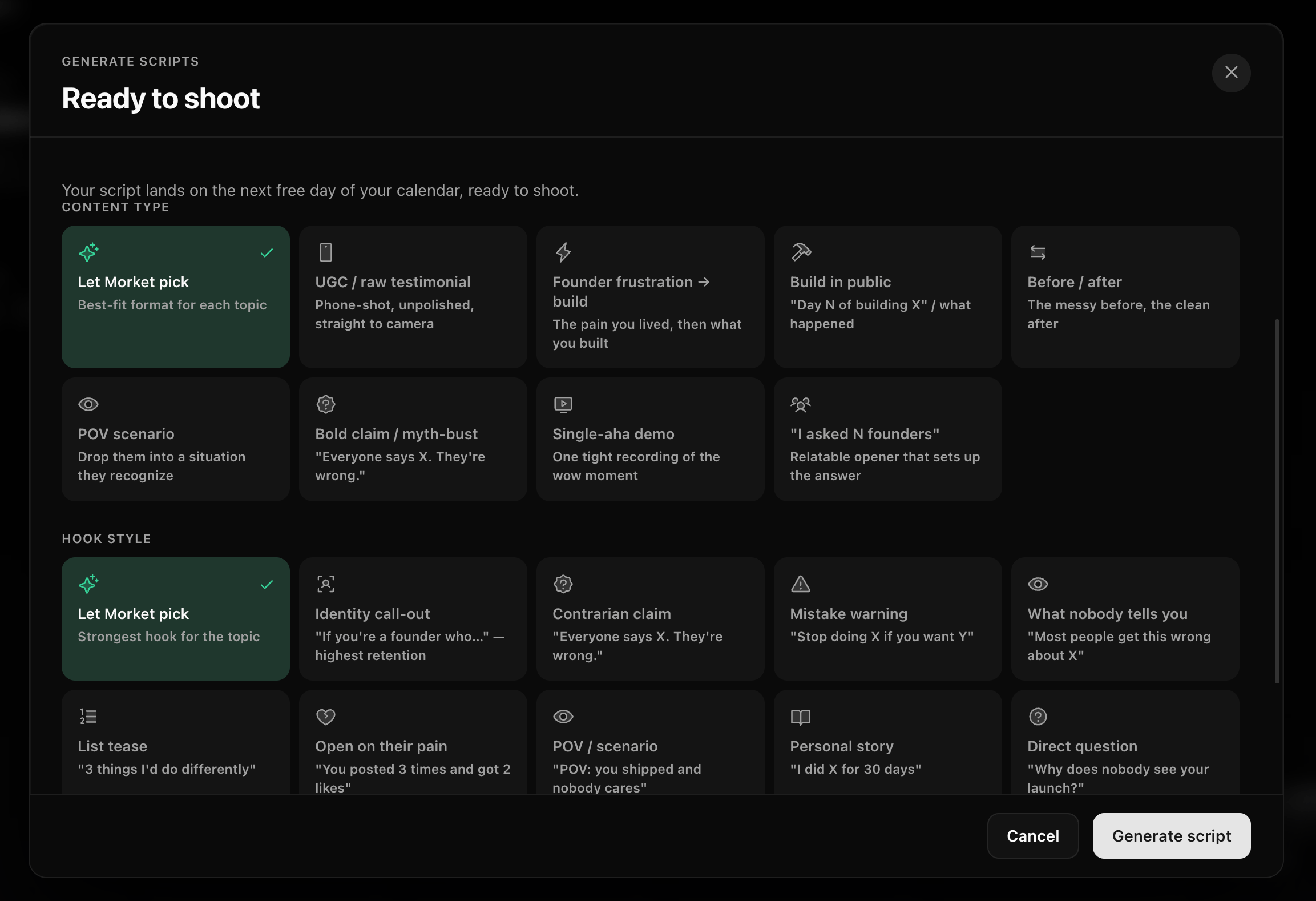
Hooks can significantly enhance the traction your content gains by capturing attention and encouraging deeper engagement. Here are some effective hook styles you can use:
- Identity call-out: "If you're a founder who..." This approach directly addresses the reader's identity, creating an immediate connection.
- Contrarian claim: "Everyone says X. They're wrong." This type of hook challenges common beliefs and piques curiosity.
- Mistake warning: "Stop doing X if you want Y." Highlighting common mistakes can engage readers by offering valuable insights.
- What nobody tells you: "Most people get this wrong about X." Providing lesser-known information can position your content as a must-read.
- List tease: "3 things I'd do differently." Lists promise concise, actionable insights, which are appealing to readers seeking quick takeaways.
- Open on their pain: "You posted 3 times and got 2 likes." Addressing a common pain point can immediately resonate with your audience.
- POV / scenario: "POV: you shipped and nobody cares." This approach immerses the reader in a relatable situation, fostering engagement.
- Personal story: "I did X for 30 days. Here's what happened." Personal experiences can create a narrative that draws readers in.
- Direct question: "Why does nobody see your launch?" Questions can intrigue readers and prompt them to seek answers in your content.
Integrating these hooks into your content strategy can help you attract the right audience and encourage them to engage more deeply with your material, ultimately driving the qualified engagement that performance ranking values. We have various hooks available for the Video Content module in morket.io that you should check out!